We were our truest, most authentic selves as children. We loved without negotiation, smiled without strategy, and danced like the world was watching and not care. Simplest of joys made us balloon up with happiness and the tiniest hurts broke us open. We used to be immensely curious about the world around us, emotionally honest and unfiltered by fear.
That wholeheartedness is rare in adults, yet every one of us has known it.
Now, imagine carrying that childlike congruence with an adult’s maturity. Playfulness without irresponsibility. Sensitivity without fragility. Curiosity without chaos. Not innocence, but integration. A generation of kids raised like that would be resilient, creative and kind humans. It is tempting to imagine a world shaped by people like that.
But that is not how most of us grow.
We get adulterated. Slowly and systematically. Through schools, parenting styles, social approval, and fear, we learn embarrassment. We learn comparison. We learn to trade expression for acceptance. Over time, this conditioning becomes so normal that we forget it was ever learned at all.
As Pablo Picasso once said- ‘Every child is born an artist. The problem is to remain an artist as we grow up’
Creativity is innate, it cannot really be taught.
According to a research on divergent thinking, 98% children ranked creative geniuses at age 5 and the number reduced to 2% at 31 years of age.
Creativity is not beaten out of us; it is corrected out of us. Instead of letting children paint their own sky, we tell them the sky is blue. I’m reminded of something Ishita Katyal, a fourteen-year-old author, once said: instead of asking children what they want to become when they grow up, we should ask them who they are becoming now. There is a quiet wisdom in that question. It resists obsession with outcomes and brings the focus back to presence and becoming.
Instead, many of us grow up running. Running toward goals we did not consciously choose, winning races we do not fully understand. And no matter how fast you run in a rat race, you are still a rat.
In this process, we do not just lose creativity; we lose emotional capacity as well. Sensitivity becomes inconvenient. Vulnerability feels unsafe. Those who retain it often believe something is wrong with them, when it may be that they are simply responding honestly to a world that has learned to numb itself.
The kind of love we receive in childhood becomes the blueprint for how we love as adults. Our attachment styles are shaped by those early experiences. It baffles me that love is often treated as real only when it comes with history, labels, or guarantees, as if care, warmth, and depth without security are somehow illegitimate. As children, we made best friends in a single afternoon. As adults, we often require security before we allow ourselves to feel.
We’re born creative, emotional, curious, sensitive, compassionate, playful, excited and alive. Gradually, we drift. No matter how far we drift, I like to believe there’s a way back.
I felt most like myself as a child. Like everyone else, I got adulterated along the way. I stayed close to creativity, but I did not develop resilience around shame. Unlearning it has been an ongoing process, one that quietly reshaped how I see myself and the world.
Unlearning, however, does not begin without self-awareness as the first step. And adulthood, at its core, can become an act of unbecoming, not a return to childhood, but a movement toward wholeness. It is ironic how we are biologically unique down to every cell, yet often feel safest in conformity.
“Childhood is a promise that is never kept.” So let’s keep it, in our own way. Because unbecoming into who we were, while holding on to who we have become, may be the truest form of freedom.
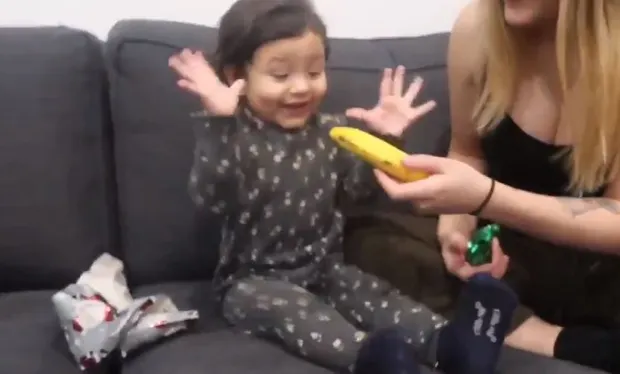
As for those raising children, this is not advice. It is an attempt to hold a child’s truth with an adult’s understanding.
Love children deeply, but do not “protect” them into incompetence to survive the real world. Respect is not something they must earn; it is something they are born with. Apologize when you are wrong, and take their ideas seriously.
Children do not need to be taught compassion or creativity. They arrive with both. The responsibility is not to mold them into something better, but to avoid squandering what is already alive in them. You do not have to save them, but it helps when they see you trying to save yourself.
Never shame children for how they feel, and never compare them. Shame resilience grows when children are loved for who they are, not who they perform as. It is a quiet but powerful capacity, one that helps people navigate the real world with both strength and softness.
Like everyone else, children are hardwired for struggle. They will make mistakes, many of them. The work is not to prevent struggle, but to remain present through it.
This applies, in different ways, to every relationship in our lives.
Links for more: